
Launching Australia Ripped Off
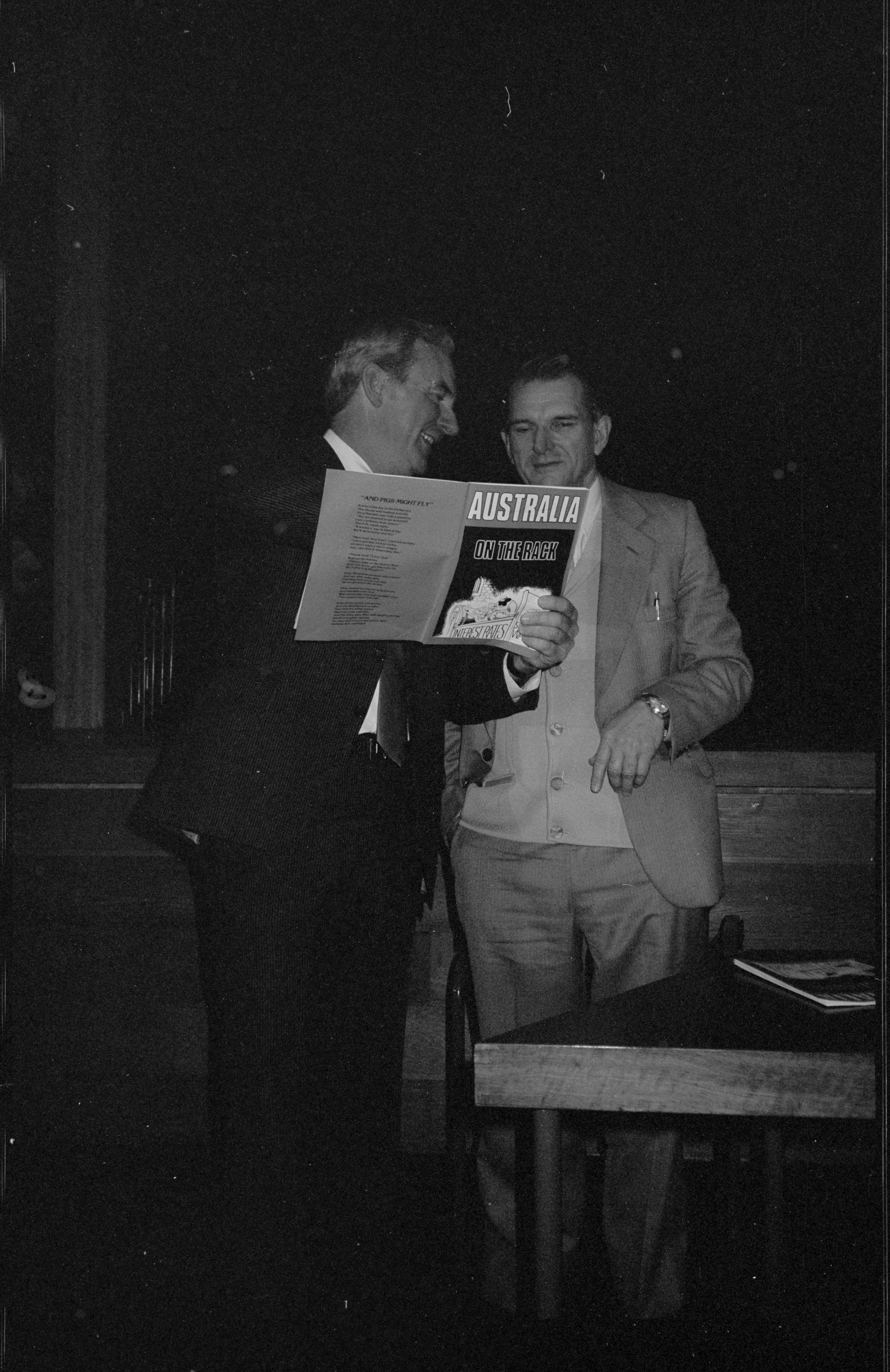
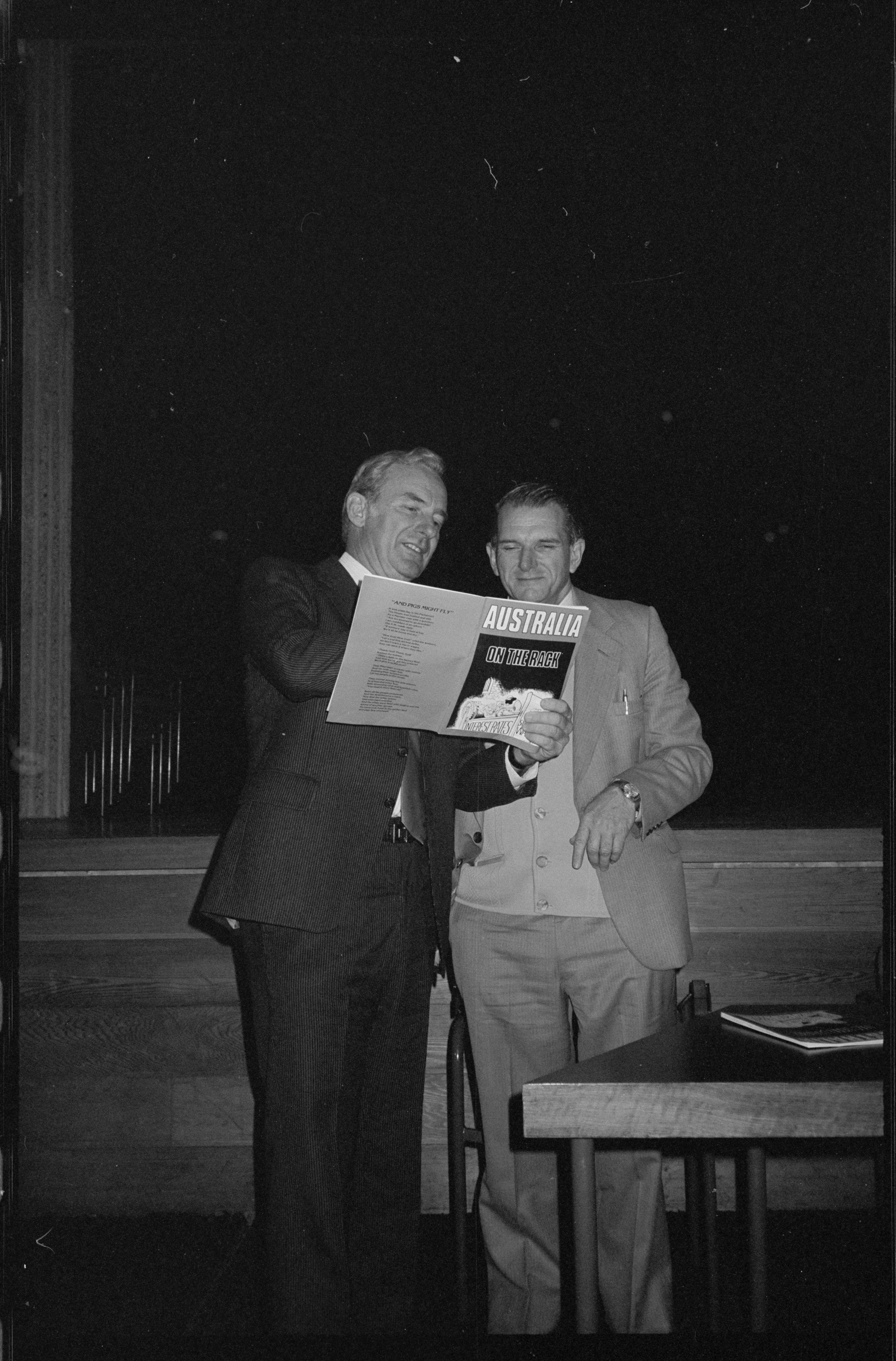
The Amalgamated Metal Workers and Shipwrights Union (AMWSU) launched Australia On The Rack in 1982 as part of a series of popular style economics pamphlets sent to every member of the union. The pamphlet featured in the AMWSU’s education programme and then spread quickly into the courses run by the newly emerging Trade Union Training Authority for union shop stewards and officials. Other pamphlets in this series included Australia Uprooted, Australia Ripped Off, and Australia on the Brink.
We acknowledge and thank Tribune – SEARCH Foundation for making these photos publicly available through the State Library of NSW.

August 27, 2025
Laurie Carmichael as Union Trainer
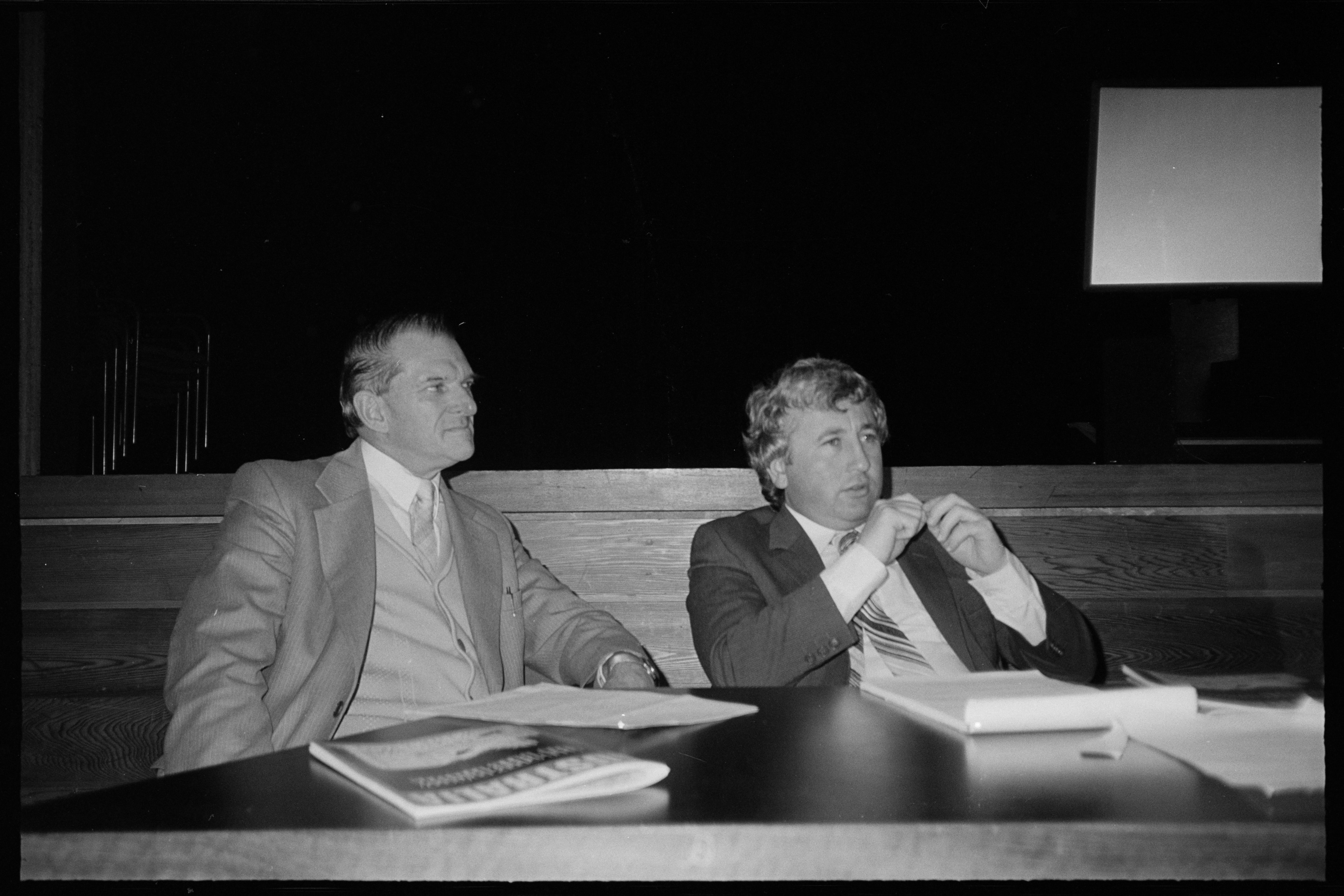
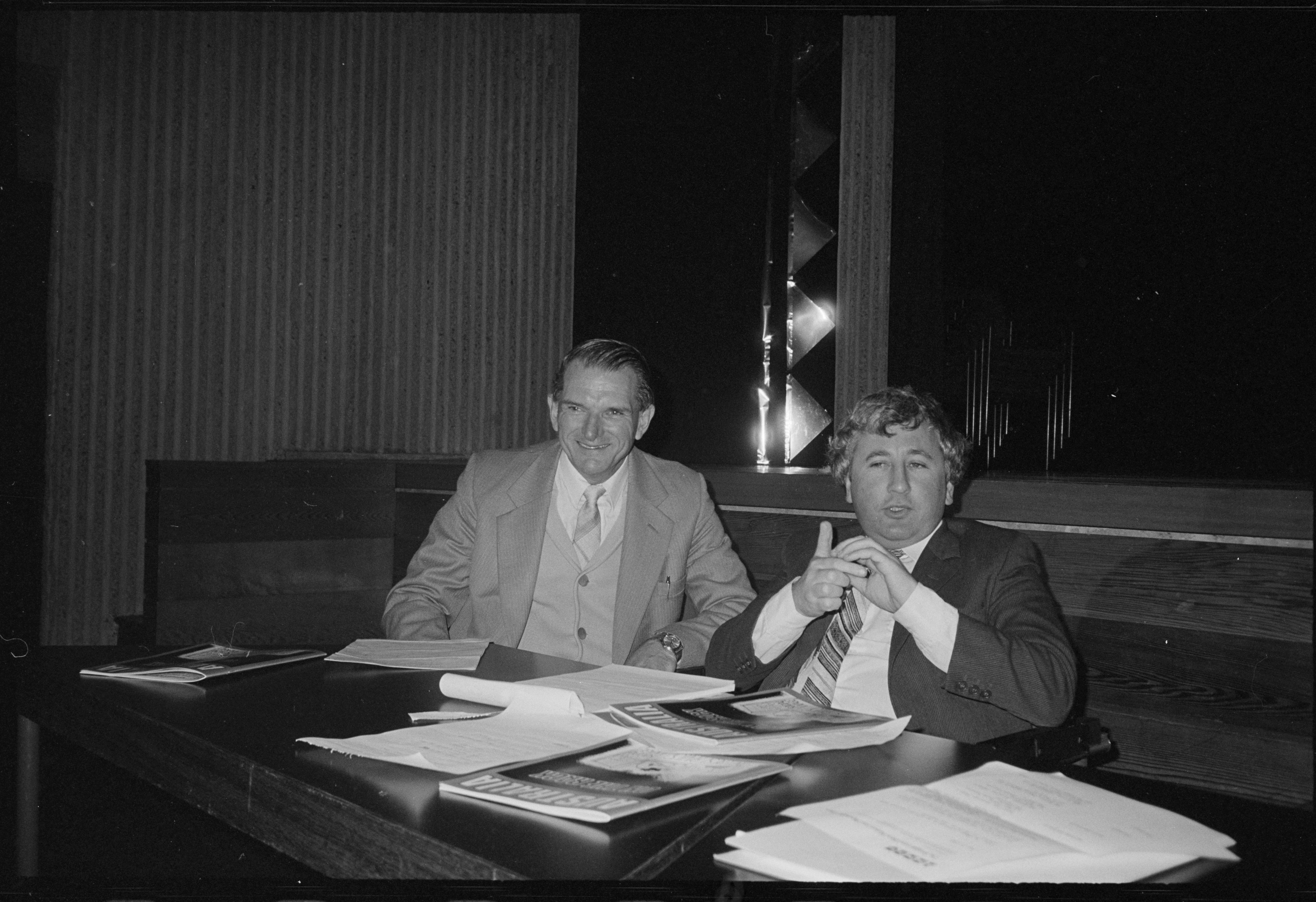
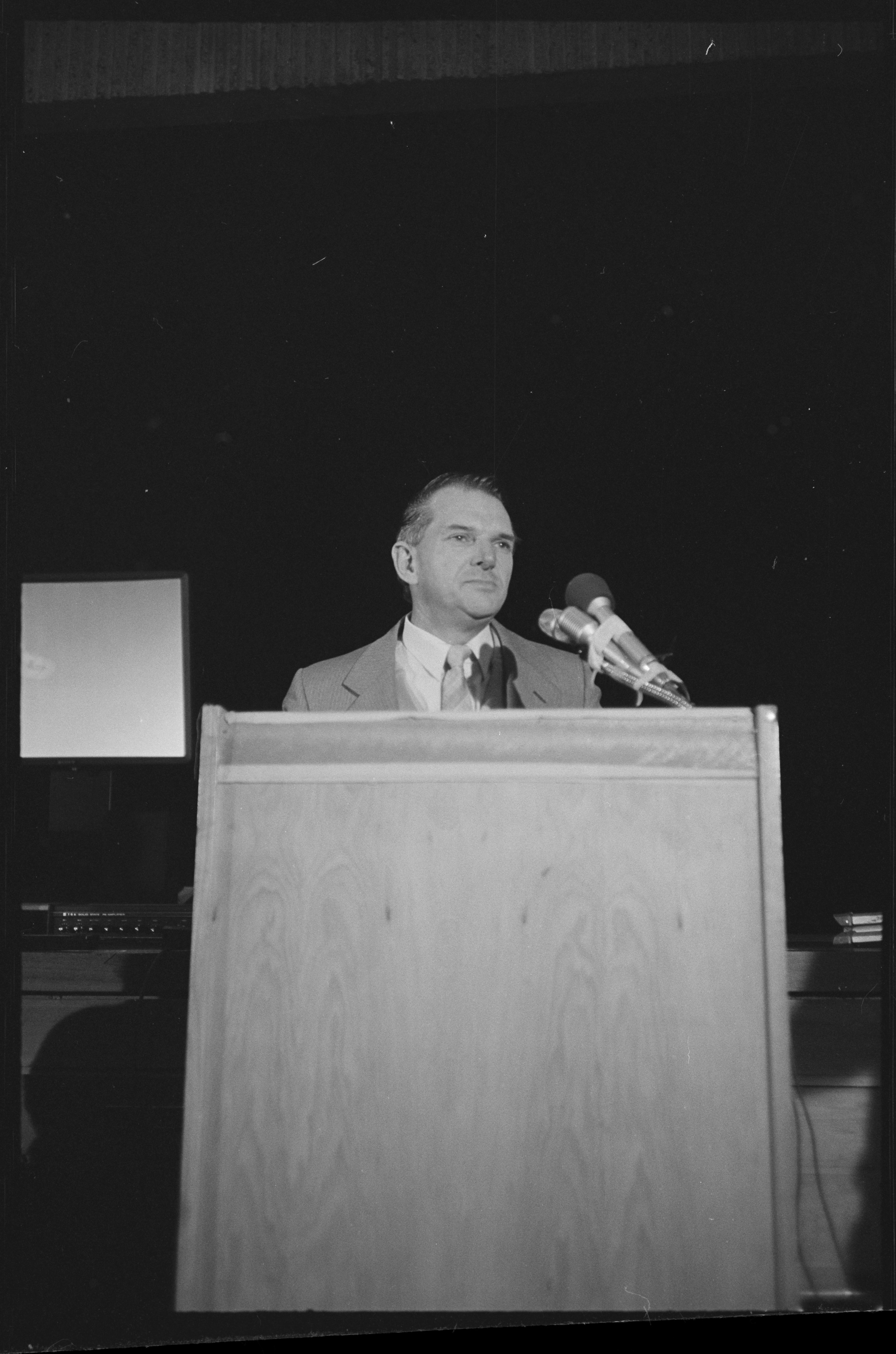
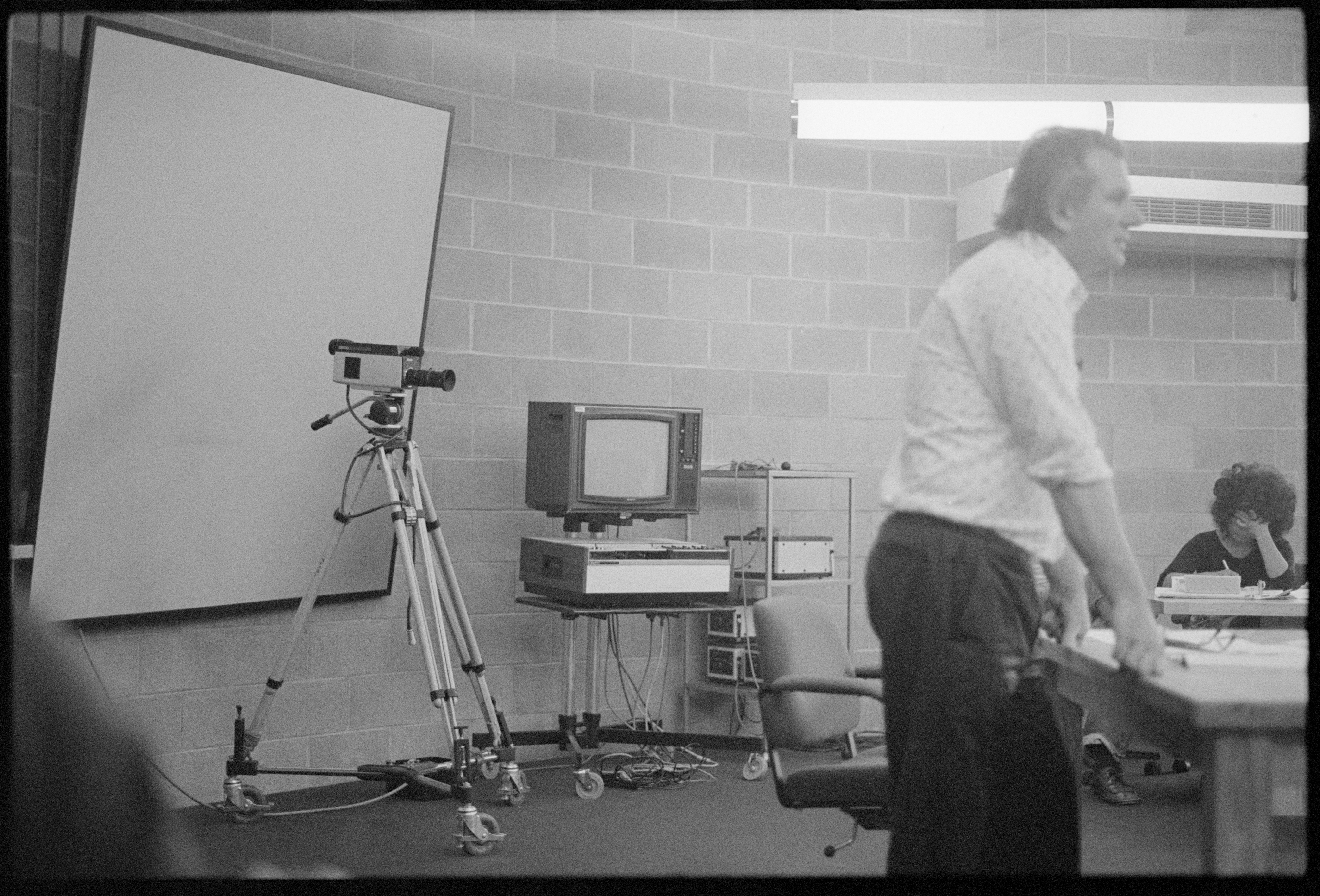
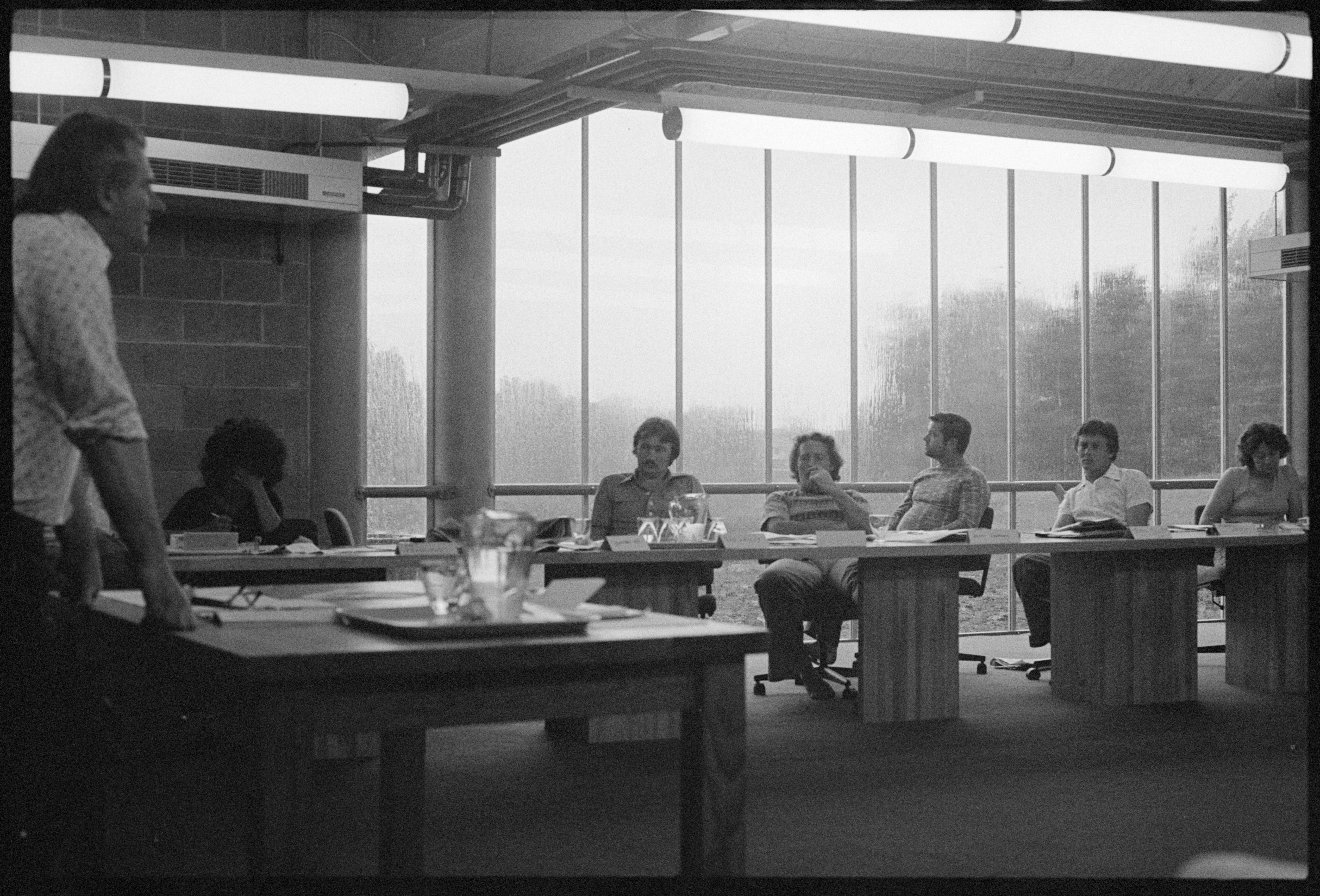
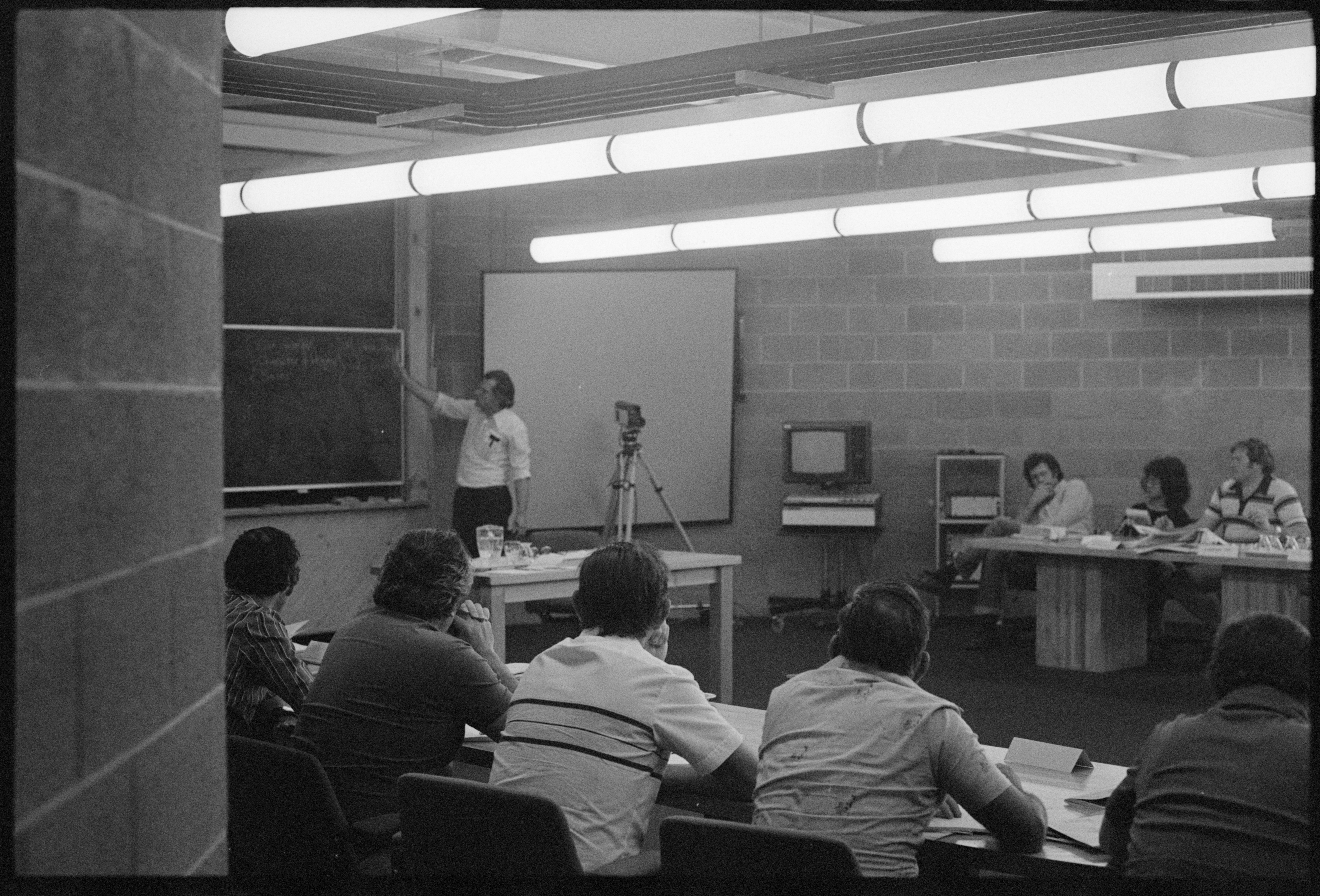
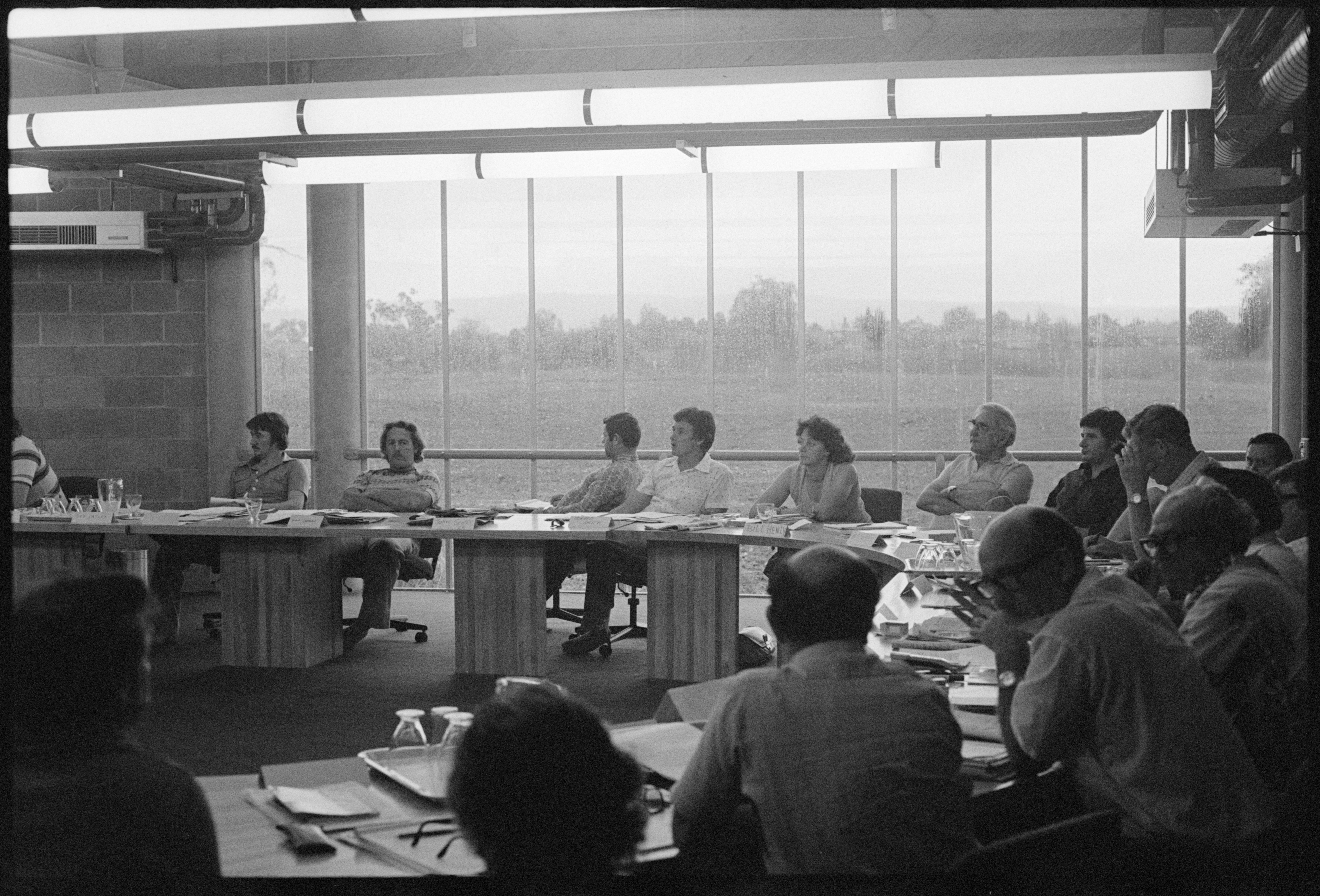
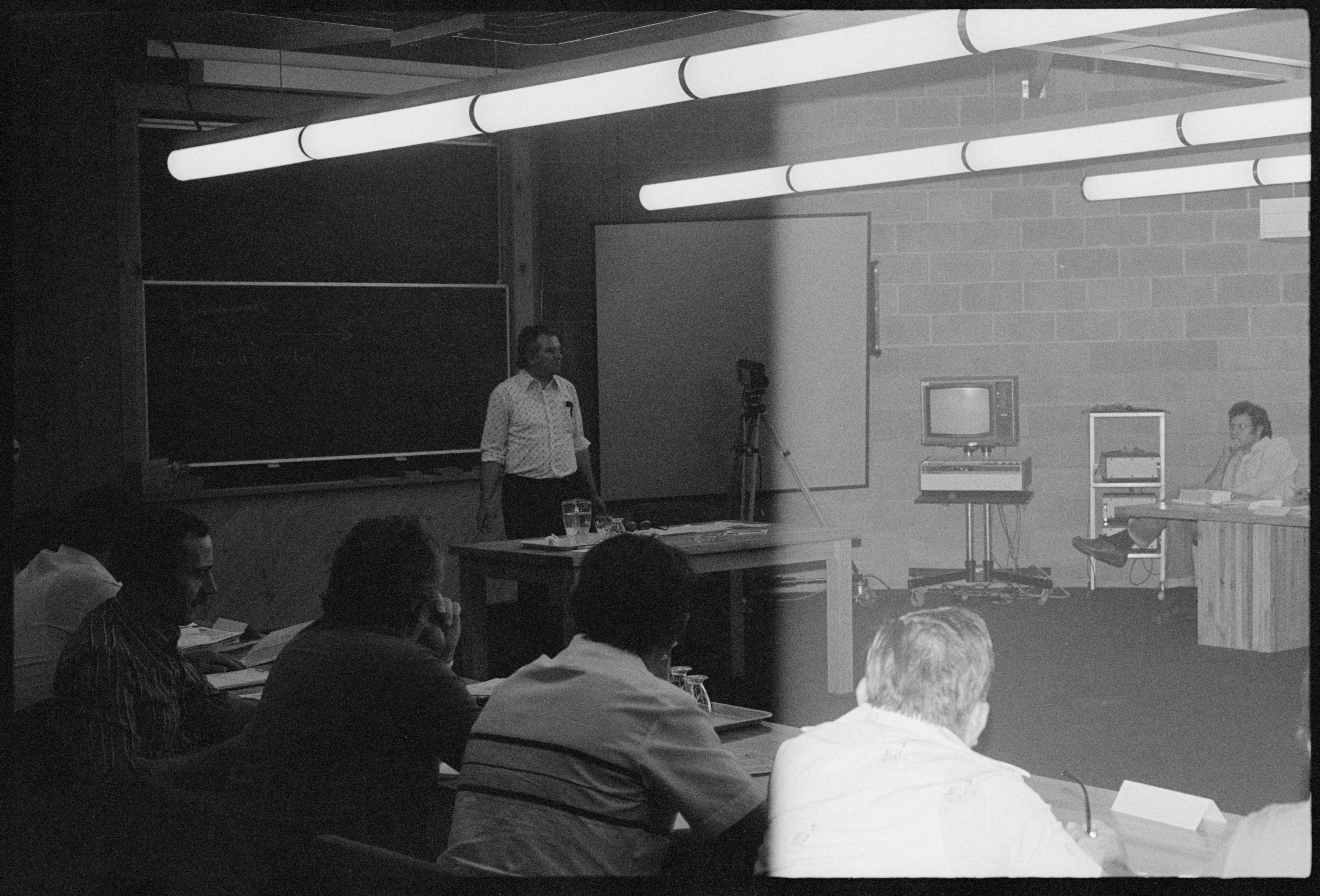
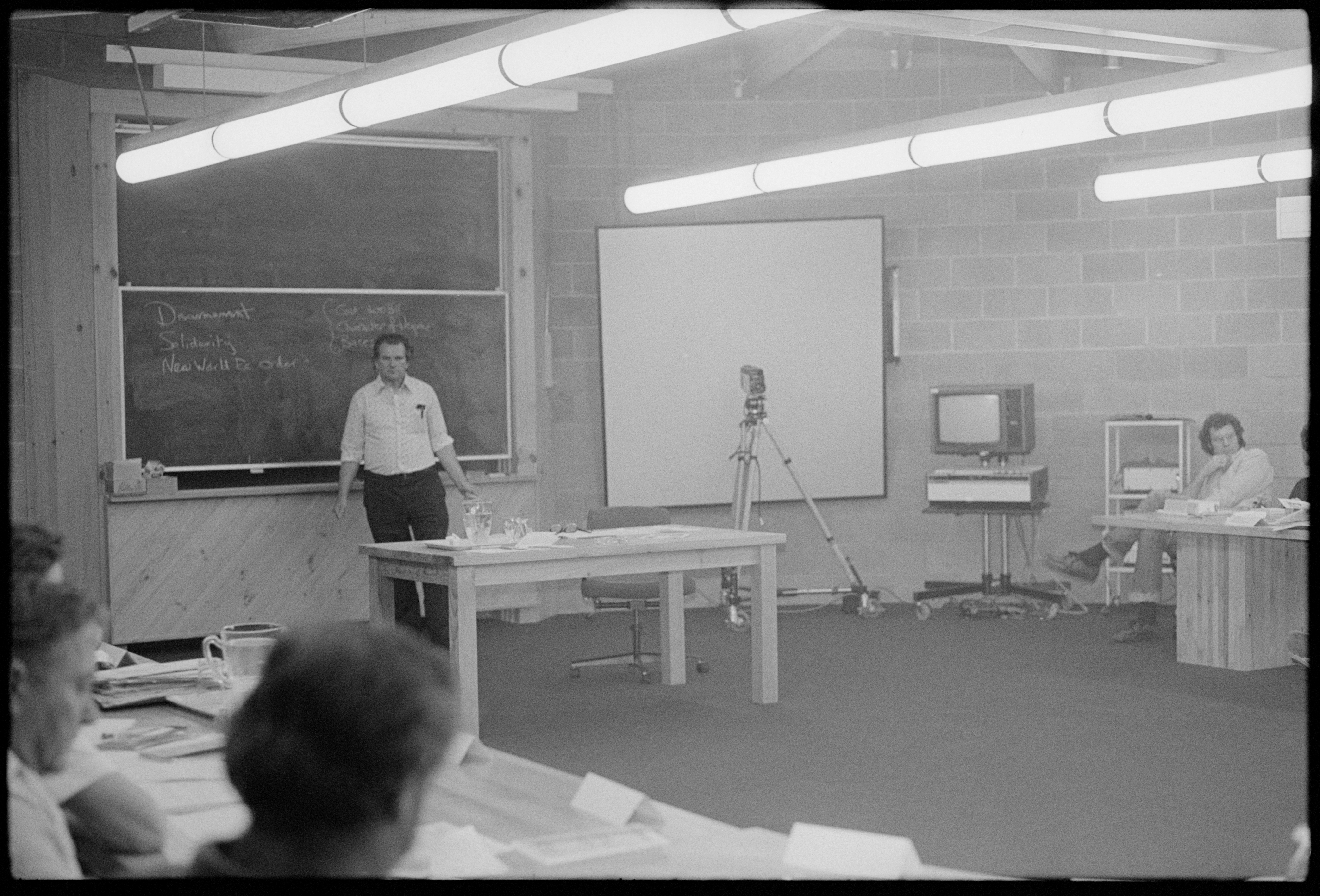
In these photos we see Laurie Carmichael in action as a union trainer, while Assistant National Secretary of the AMWSU, at the Clyde Cameron College in 1978.
The Clyde Cameron College was the national, residential “training centre” for the Trade Union Training Authority (TUTA).
This is probably one of the first courses conducted at the CCC, which was a residential college with advanced facilities (including a seriously good library) in a modern building of its time. Carmichael was one of its great champions.
The participants in this course come from several unions including from the AMWSU, Carmichael’s own union. Jim Baird (a national organiser at the time) and Ted Wiltshire, from the union’s national research team, are there. Wiltshire was a prominent figure in the research and education work for Australia Uprooted, Australia Ripped Off, and the similar union pamphlets that followed in the next 12 years or so. He also played a prominent role in the Australia Reconstructed project in 1987.
It is likely that the material in these pamphlets, the rationale for them and the associated industrial strategy for which they were produced, was primary content in this course.
We acknowledge and thank Tribune – SEARCH Foundation for making these photos publicly available through TROVE.
August 05, 2025
Laurie Carmichael on “The Accord” 1984
Interview conducted by Lesley Dormer for Workers Weekly, Radio 5UV, University of Adelaide. (Produced by Ray Broomhill.)
Introduction - Don Sutherland
This interview was run about 12 months into the Hawke Labor government’s operation of “The Statement of Accord by the ALP and the ACTU regarding Economic Policy” (The Accord), created in February 1983.
Interviewer, Lesley Dormer, enables Laurie to explain what had been achieved in the first 12 months, outline the character of the Accord from his point of view as a medium for “higher intervention” by workers, and why that was necessary. He starts by emphasizing a point about strategy: that in that first year the Liberals’ monetarism had been rejected.
Carmichael also outlines the problems and obstacles that have not been overcome and introduces the crucial question of the relationship between the industrial wage and the social wage in defining living standards.
Presciently, he describes the potential of the finance system to be a defining "nuisance" in the efforts to get the full value out of the Accord strategy.
His discussion on the industrial wage raises vital questions; for example, “militant” unionism can, in a particular form, promote a wages struggle that aligns with the free-market approach of the employers. Thus, here in 1984, he suggests “enterprise bargaining” is in that framework.
The interview concludes with a brief discussion that links his approach to the Accord to earlier views he had expressed about an open-ended transition to socialism.
August 05, 2025
Laurie Carmichael on ABC Lateline (1991)
This interview coincides with Laurie Carmichael’s retirement in 1991 from his roles in the leadership of the union movement. We also see archival footage and comments from right wing critics.
July 30, 2025
Laurie Carmichael as Union Educator
With Organising Works Trainees 1997
In this excerpt we see one aspect of Laurie Carmichael’s approach to union education.
He is working with Organising Works trainee organisers from several unions, based in Melbourne.
Organising Works was set up by the ACTU and participating unions as a union education program that synthesised learning in the field with regular 2- and 3-day courses in the training room.
Key concepts in this excerpt include "learning by doing", the significance of awards, awards as a record of class struggle, history and the immediate priorities.
As the industrial relations system developed this seminar marks a transition from the primary importance of awards and award-based disputes in the conciliation and arbitration system to the system of enterprise bargaining that replaced it, eventually into what is now the Fair Work Act 2009 (as amended).
In those times industry, company specific and occupation awards set the minimum standards that would apply to all workers covered by them. Awards could be changed – for better or worse – by creating either a real dispute (strike, go slow etc.) or a “paper dispute”. At some point conciliation and arbitration would occur under the direction of a commissioner or a panel of commissioners.
Workers, through union membership, could use industrial action to pursue their claims or to prevent the employer from not “sticking to the award”, that is running the work process in some way that breached or weakened the award.
They could also use a simple application, either with or without the consent of the employer(s), to vary the award.
Carmichael was a leading figure in the tradition that said the best result from the Commission (The Conciliation and Arbitration Commission) came from the determination of members to exercise strikes and other actions as counter-power against the opposition of the employers and the pro-employer bias in the Conciliation and Arbitration Act.
Education and learning – in a union way – was an essential element of Carmichael’s approach to industrial disputes and the conciliation and arbitration process that went with them. He was a renowned advocate and had a thorough knowledge of the award system, including the pay relativities across different awards.
Carmichael saw awards as fluid industrial instruments, each one a compromise for a period that reflected the relative balance of power between the employer(s) and the workers and their unions.
The right wing of the union movement that included the Catholic organised “Groupers” usually opposed and even undermined the use of strikes and other forms of collective action to advance workers’ demands. Others took a middle ground.

June 23, 2021
Union Organising at the Workplace, Laurie Carmichael
Laurie Carmichael was a renowned organiser as a shop steward, senior shops steward and in his various roles as a union official.
In this excerpt from the Organising Works Trainees’ seminar, Carmichael explains his methods of organising at the workplace level, including the “thrippance” technique.
It is worth noting the educating character of his organising method.
Laurie Carmichael Speaks at Organising Works, Melbourne, Victoria, 1997: Excerpt
Key ideas in Carmichael’s presentation are summarised at the start of the video.
Organising Works was an ACTU young organisers traineeship programme introduced in the early 1990s to support union efforts to reverse the decline in union density. The program concept and the organising method it taught the trainees drew heavily from the US unions that were organising relatively well in a hostile anti-union political climate.
This excerpt focuses on Carmichael’s method of union organizing including his “thrippence method”, “the active 10%”, and networked shop stewards’ committees.
The method he describes was an Australian method of organising – including within the context of the award system – that was established well before the Australian unions’ discovery of the core ideas in the US unions’ methods.
Carmichael’s election to his first full-time role as the Secretary of the AEU’s Melbourne District would not have been possible without the application of this method developed during his time as Convenor of the AEU and Combined Shop Committees at the Williamstown Naval Dockyard. As Secretary, he extended this method through his dedicated, strong-minded team of organizers and, that led to the successful union campaigns that followed.
Around the same time Carmichael was working with two other renowned, retired union leaders to contribute to the Organising Works Programme: Tom McDonald from the CFMEU and Tas Bull from the MUA.
Each gave a very important lecture about their experiences over decades of activism and leadership at an Organising Works Residential Course later in 1997. Those lectures were recoded but, regrettably, the recordings have been mislaid.
Carmichael’s lecture elaborated on the theme of strategy and leadership, providing a theoretical framework for strategy in a union and left political context, using three case studies out of his own direct experience: the defeat of the penal powers in 1969, the Vietnam Moratorium Movement against the war in Vietnam, and the shorter hours campaign.
June 07, 2021